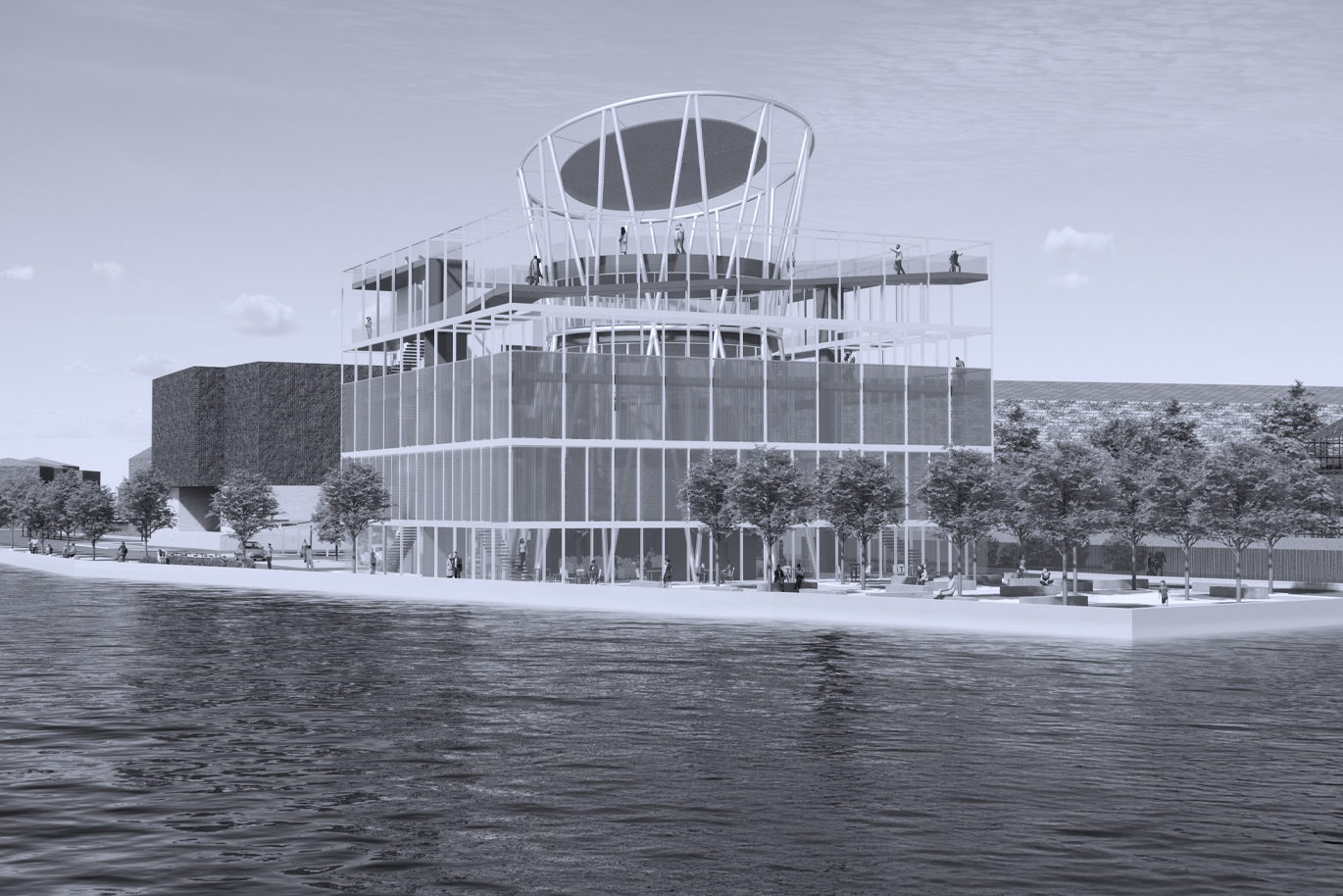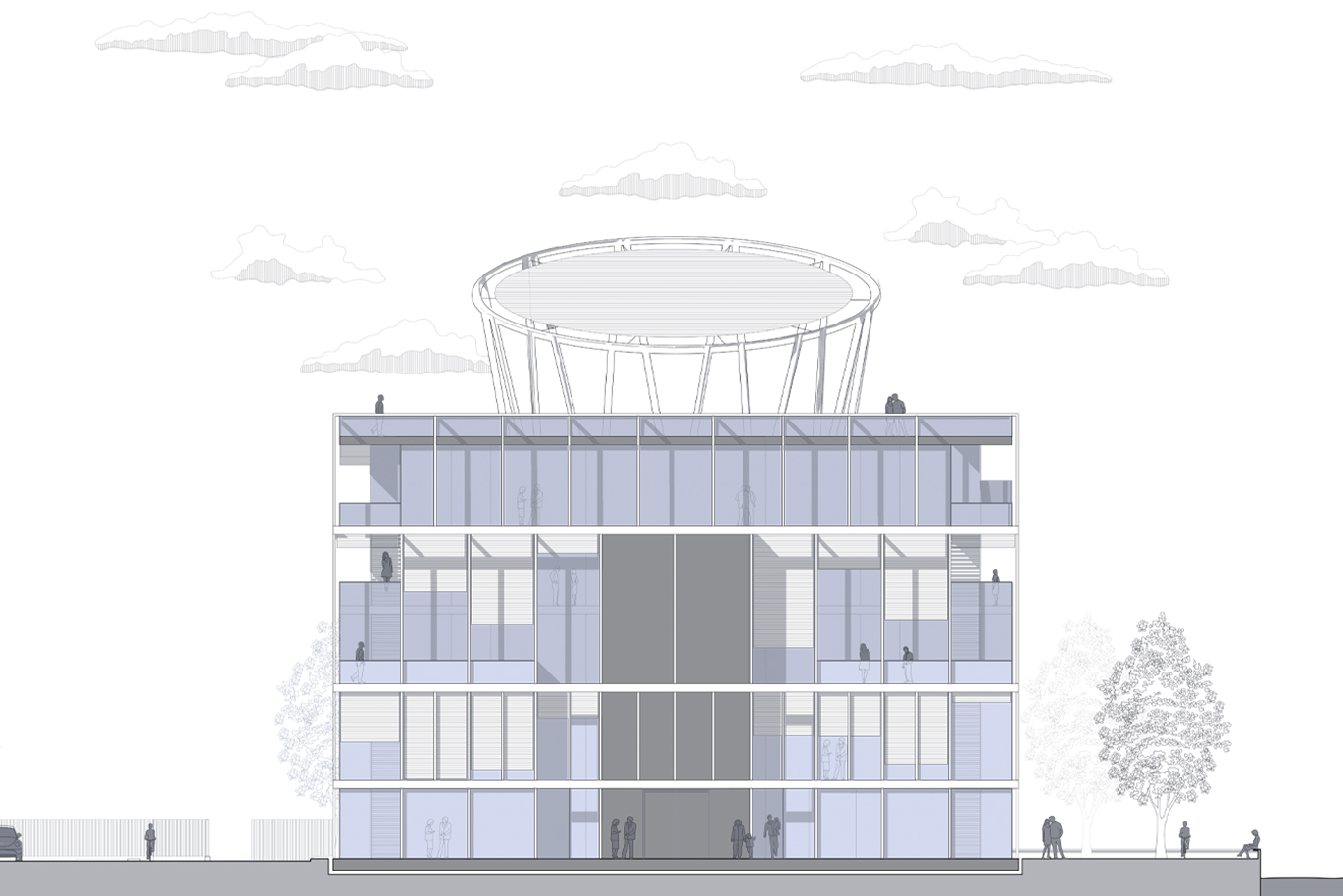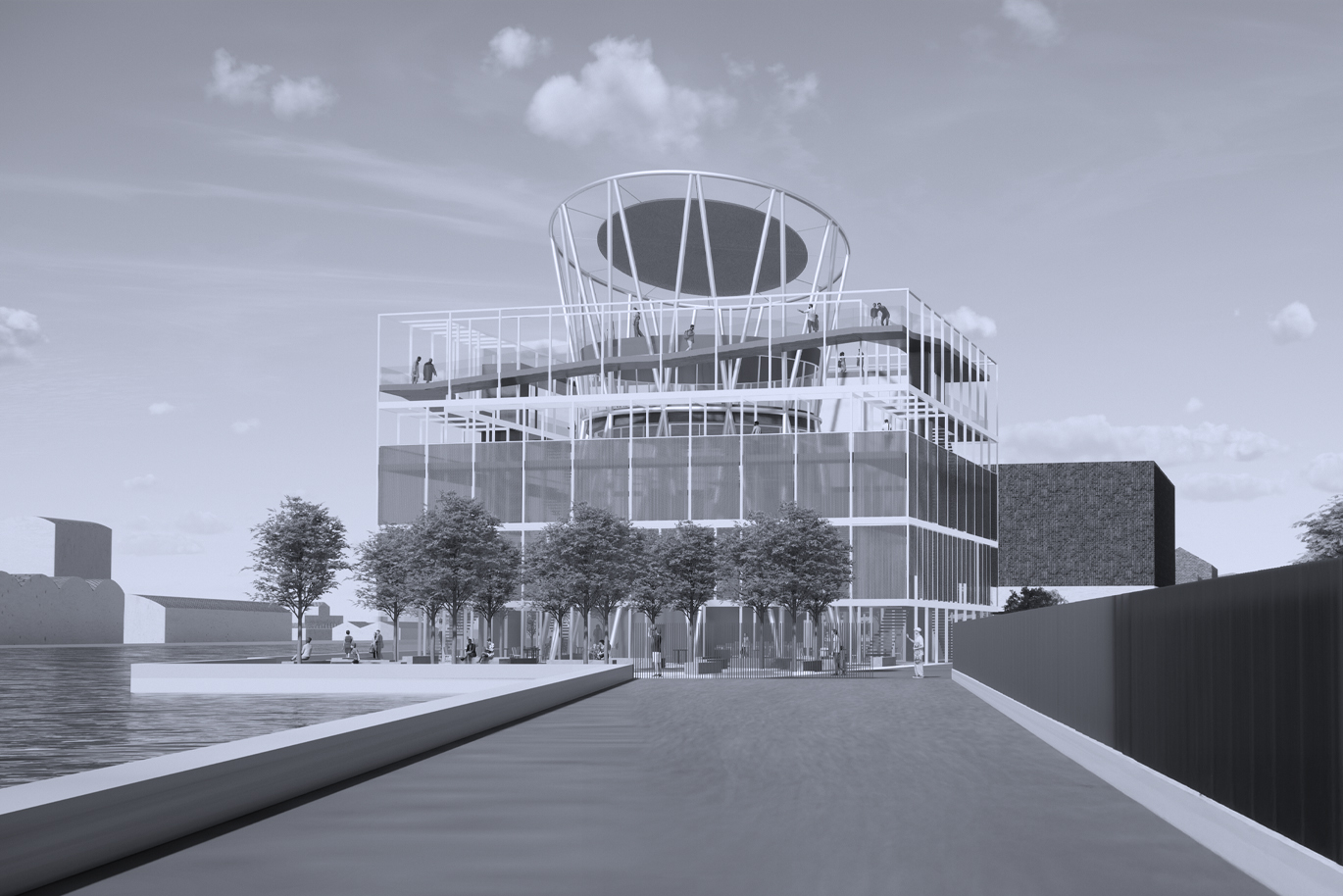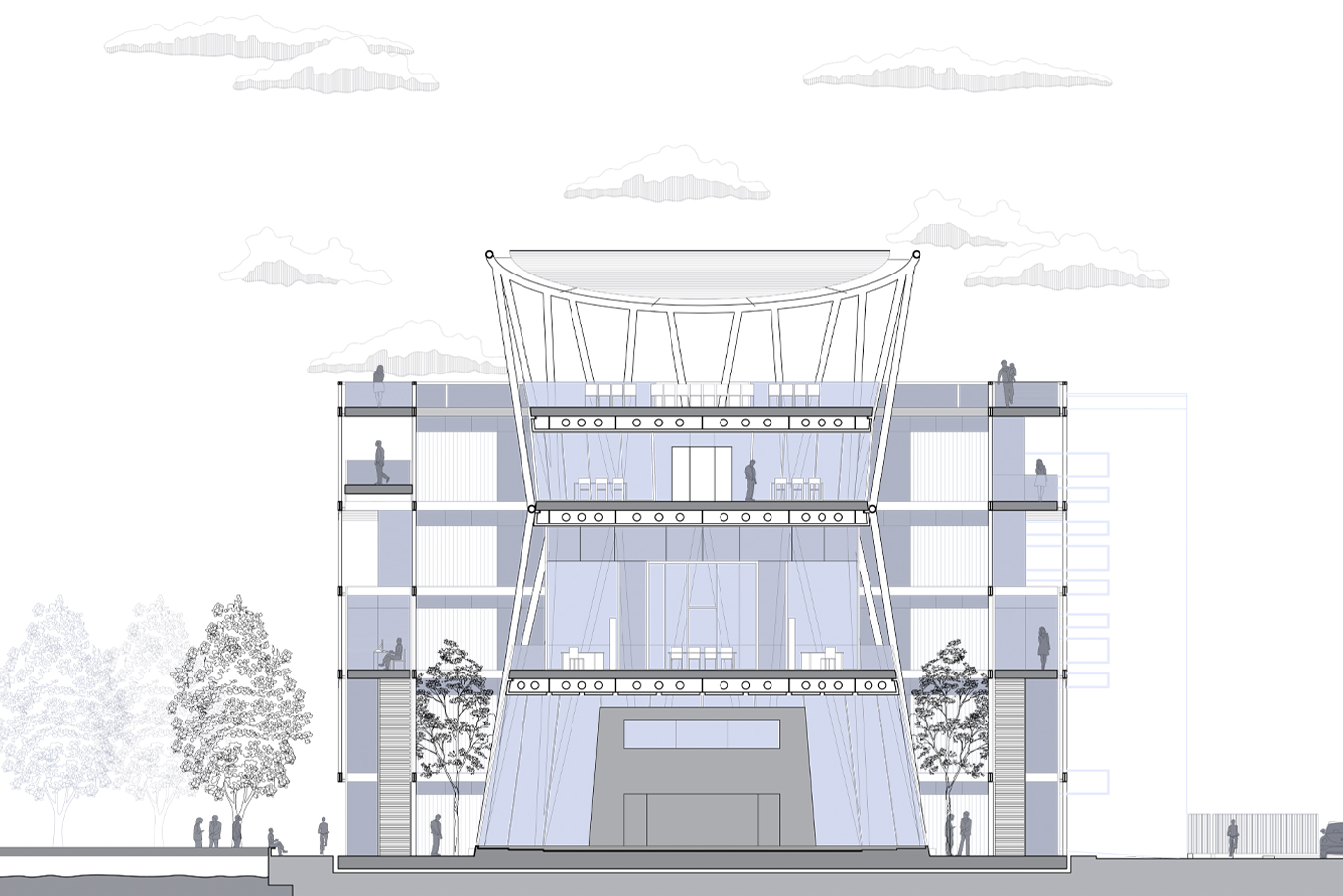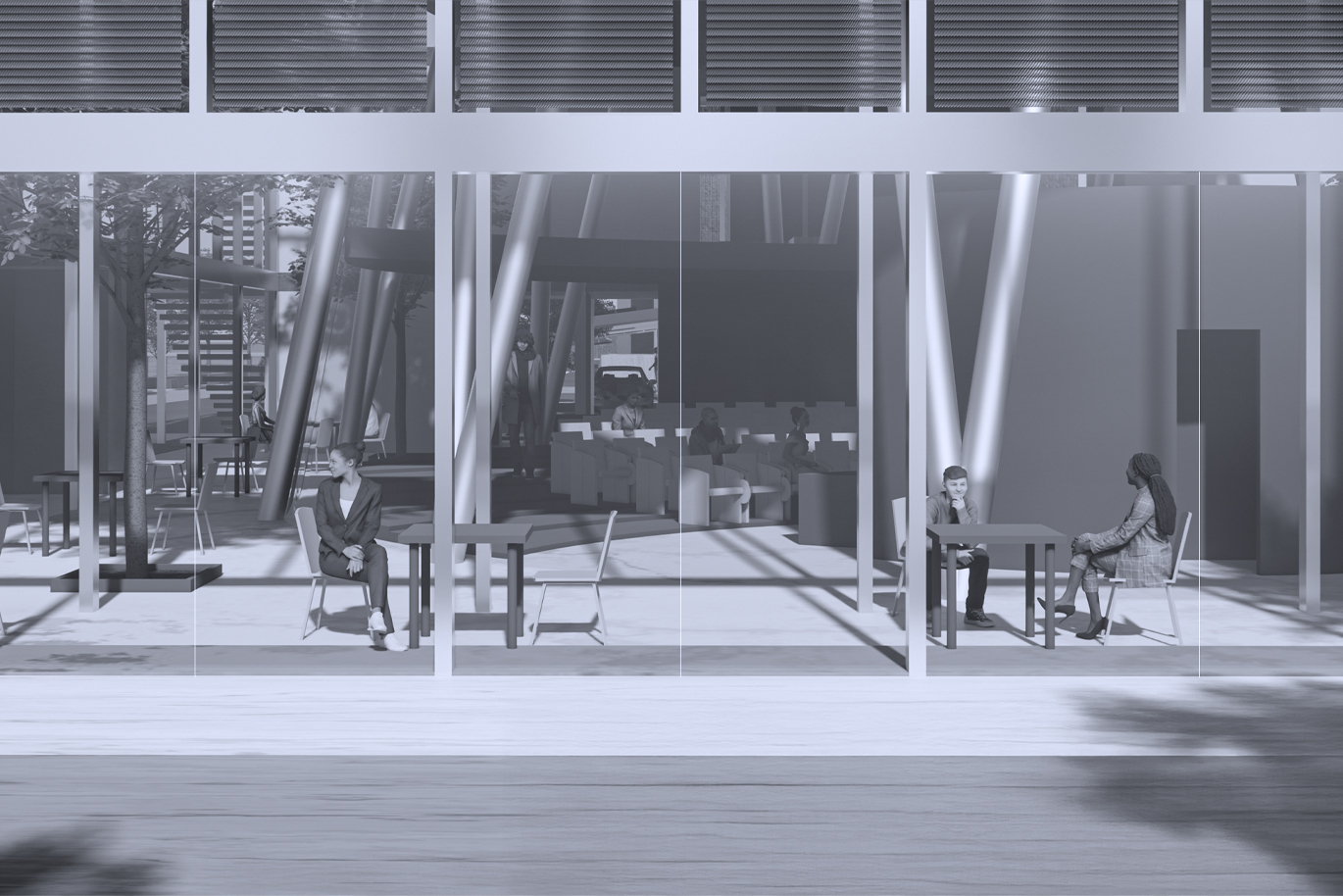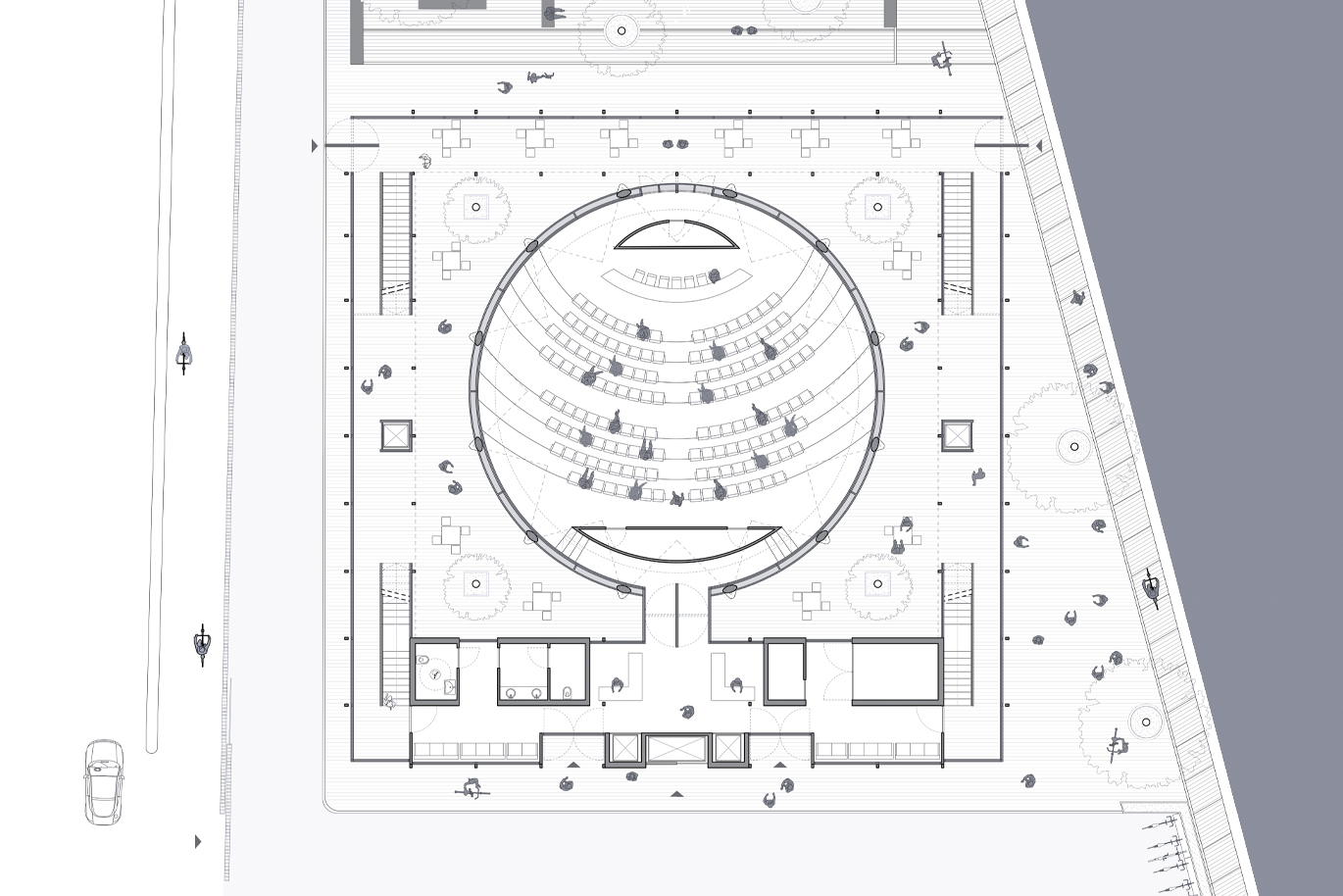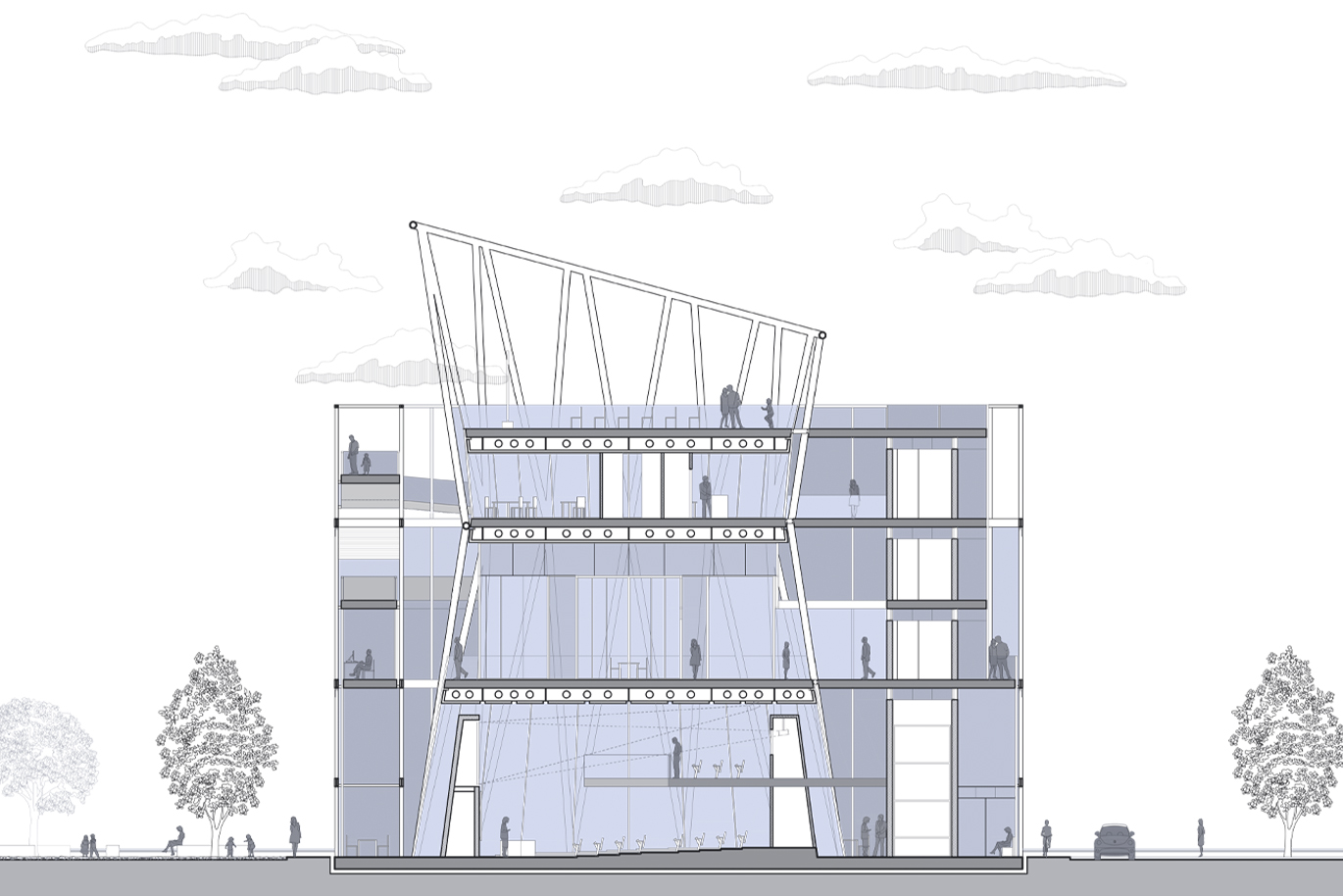
The project defines the building envelope as a performative and symbolic device: a facade-manifesto conceived as an infrastructural grid wrapping the central tower. This external framework recalls the imagery of cargo ships and industrial containers, translating the language of the port into a public and civic architecture. Its chromatic unity, combined with layers of opalescence, transparency and movable solar screens, transforms the facade into an urban signal, simultaneously technological, bioclimatic and expressive.
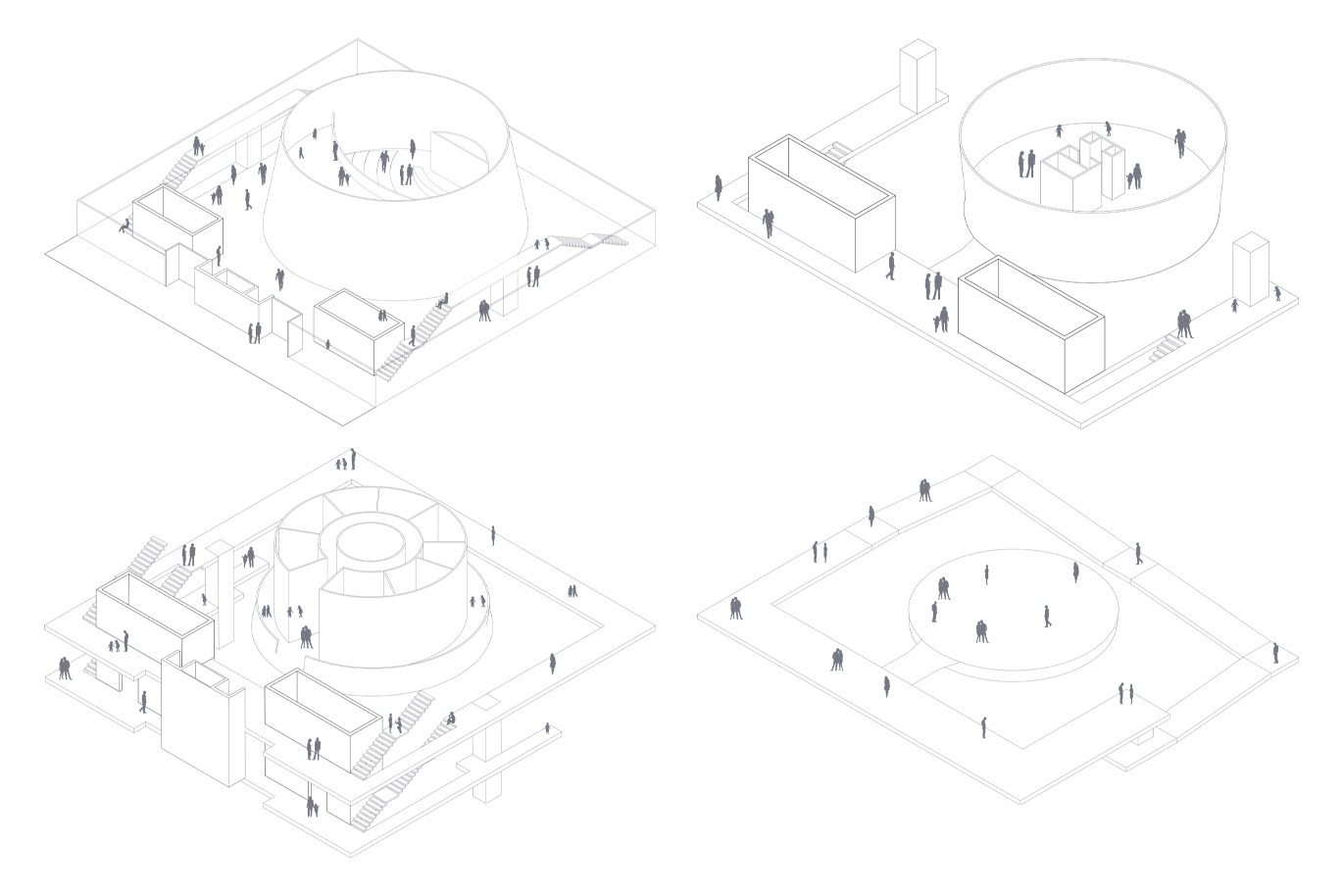
The envelope functions as a sensitive skin, regulating thermal, acoustic and environmental performance while generating a thick, inhabitable space. This intermediate layer accommodates circulation, services and potential expansions, ensuring fire safety, reversibility and long-term adaptability. Two independent circulation systems allow public access to the main functions and to the roof terrace, conceived as a panoramic urban square, cinema and collective space overlooking the city, the Darsena and the sea.
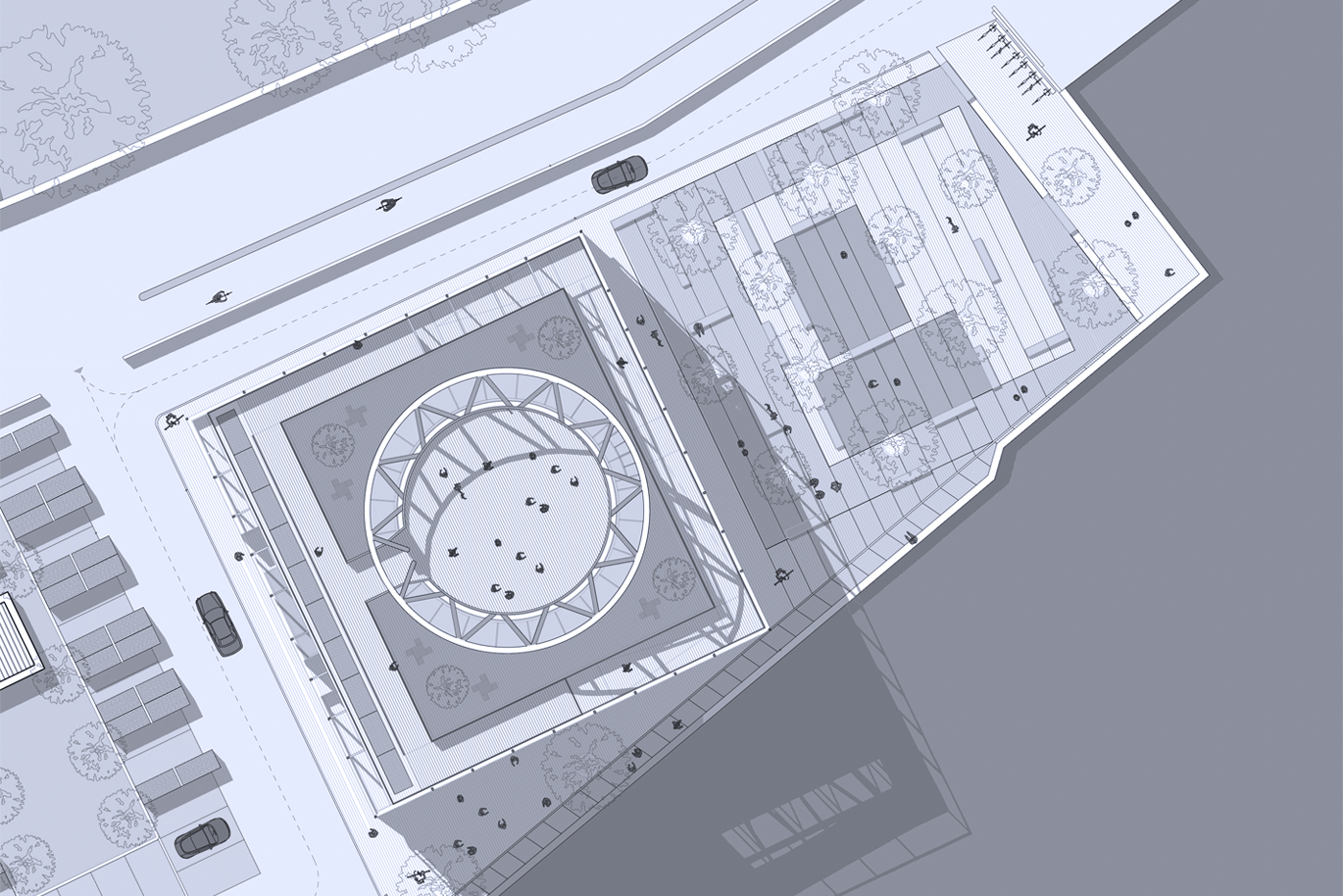
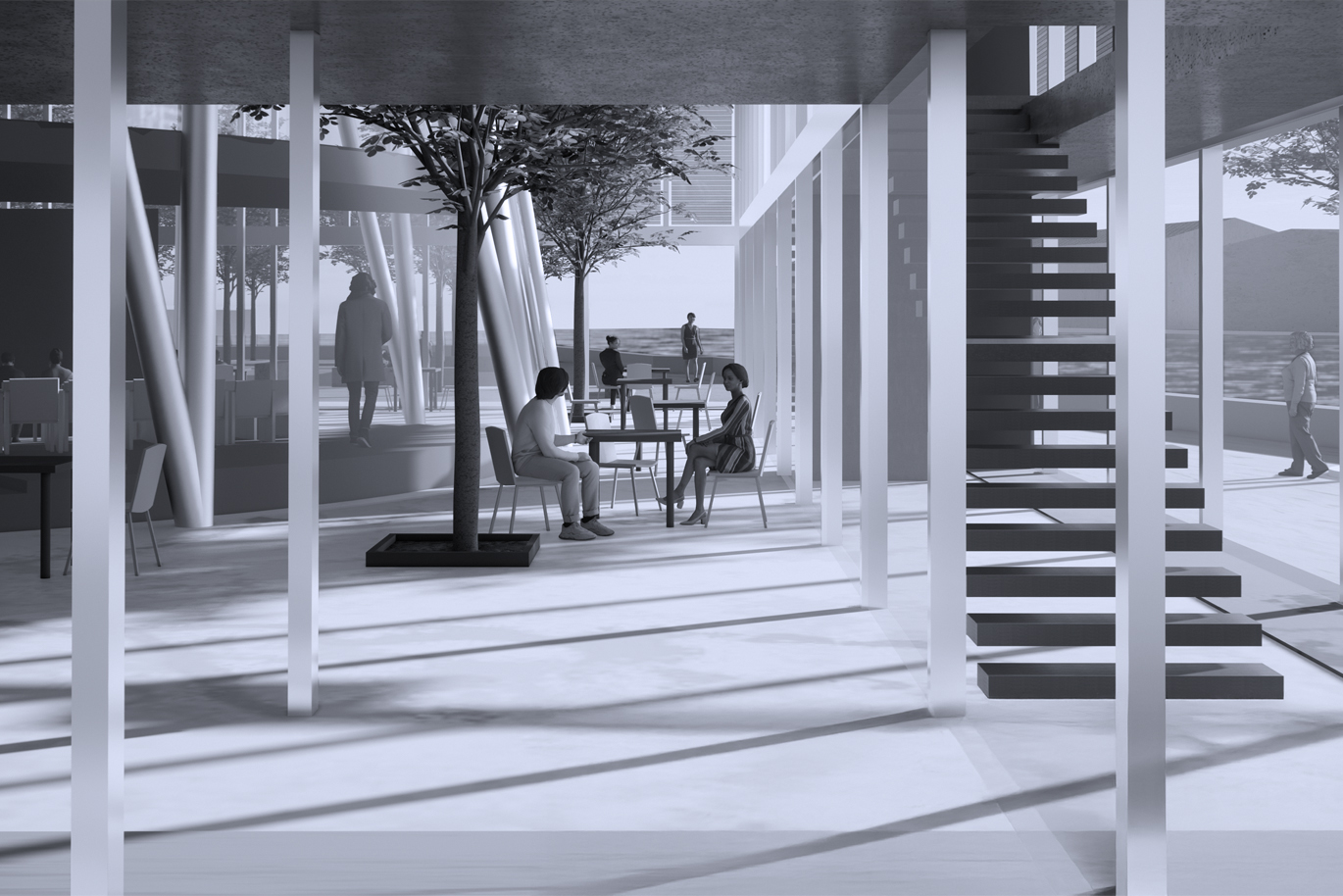
The building is bioclimatically oriented: more closed and massive on the west to control solar gain through accumulation systems, and more open toward the east, where a public plaza and a patio establish continuity between interior and exterior. The patio acts as a climatic and spatial filter, extending the event hall into a protected garden-like space, while north and south facades support natural ventilation through a greenhouse effect.
Flexibility is a core principle: the conference hall can increase capacity through future mezzanines, offices can expand into the envelope or operate independently, and the restaurant is dimensioned to support events, terraces and outdoor uses. The structural grid allows phased construction and temporal evolution without altering the architectural identity.
At ground level, the project connects to the Darsena through a pedestrian promenade and a playful public square equipped for bocce, seating and shaded gathering. These open spaces transform the port infrastructure into an accessible civic landscape, mediating between institutional presence and everyday public life.
Ultimately, the architecture acts as an urban landmark and a “third place,” reinterpreting Ravenna’s industrial heritage as a flexible, inclusive and contemporary civic infrastructure, capable of hosting social, cultural and leisure activities over time.